Showing posts with label finding closure to miscarriage. Show all posts

Monday, November 8, 2010

Sharing Miscarriage with Children


Many couples resist telling their older children about the miscarriage, especially if they didn't even know about the pregnancy. However, you will not be yourself and the children will pick up on the fact that something is not right. We need to tell them about the miscarriage because:
  • They need to understand they are not responsible for what is wrong with us.
  • They need to know that it is a common and normal experience.
  • They need to be prepared for the possibility of you spending time in hospital and convalescing later.
  • The situation is not permanent, we will all get better.
It will not be easy. Be honest, no half truths or phrases such as 'I've lost the baby', 'the baby has gone to sleep', 'God took the baby to be with him', 'he has passed away' or 'our baby has gone to a better place'. These are confusing and may be misinterpreted and children can fill in the gaps and sometimes blame themselves. Perhaps they did not want the baby or did something naughty and feel it is their fault your baby has died. It is important to re-assure them that nothing they did caused this.

It is also important not to simply say ' the baby got sick and the doctor couldn't fix her/him and they died' as they may think they will too. If you need to explain what death means you can say that their body is not working any more, it cannot move or cry and cannot be fixed. If they are old enough to ask why, perhaps, 'Sometimes this just happens and we don't know why.' If you do have a reason for your baby's death explain it in simple terms that they will understand. If you have requested a post-mortem tell them the doctors are trying to find out but still may not know even then.

You may need to repeat this information as it takes time for them to understand. Keep th
em informed about what is happening (like having a goodbye ceremony and allowing them to participate) so they don't feel left out or confused. Many women like to think of their lost baby as an angel and perhaps that could be a way to explain that their spirit has left their body.

If you are keeping a box or similar of cards or mementos they may like to put something of their own in, like a poem or a toy or if you are going to plant a shrub in a garden or pot get them to help you do this. Always involve them so they will think of your lost baby as part of the family.

Let them know how you are feeling so that they know it's okay to cry when you are sad and hurting or to smile and laugh and be happy too. Offer to cuddle them any time they feel sad to help them feel better. They could suffer from as many emotions as an adult. This may all be pretty difficult when you are grieving yourself and their lives go on as normal and you feel anything but, however it is also an opportunity to bring a closer relationship between you and your children. You may also feel overprotective for a while but this will fade as the grieving lessens

Under three years old
Simply tell them that your baby has died and that's why Mummy and Daddy are sad. It is not their fault. Although they have no concept of death they still could become irritable and have disturbed sleeping patterns because of how you are feeling.

Three to six year olds
Children of this age may have some understanding of death but see it as a temporary situation and not the finality of it so they could ask questions about when the baby is coming home. This is the age when they think they could be to blame.

Six to nine years old
These children do understand the finality of death and can obsess about dying, including losing their parents. They need re-assurances but be careful of how you word your promi
se of staying alive. They will need to know more detail including that the baby did not die a violent death (a supposition for some children).

Nine to 12 years old
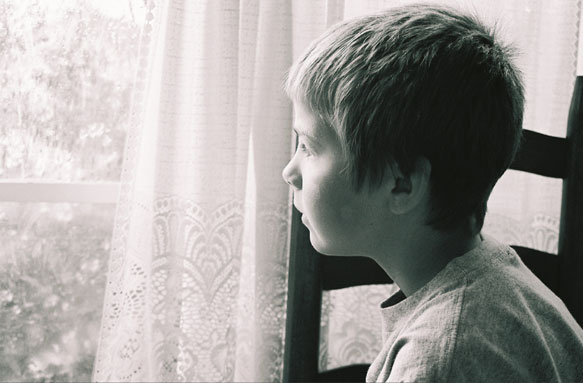
Most of this age group will have an understanding of death's finality, perhaps from when a pet has died or even a family member. They will probably express their own feelings and may also be able to offer you some comfort.

Teenagers
Not an easy age to have to deal with death as they want to retain their feeling of being bullet-proof which the baby's death will challenge. They may be more comfortable talking to a family friend than your-selves and often also need tim
e to come to terms with the situation. Their re-actions could be anything from loud music to staying out late or a comforting hug.

Explain to your family, friends, kindergarten or school if necessary what you have told your children so that no-one feels they have to make their own explanation. You understand best what your children are capable of dealing with. Ask that they support you or leave the subject alone.

A synopsis from "Life after baby loss" with the kind permission of Nicola Miller-Clendon, Author.

Sunday, November 7, 2010

Finding Closure


Some have described it as a feeling of peacefulness or returning contentment. Others talk about a "desire to let go and move on". Eventually there comes a day we can look back and think "I have not felt sad" or "I have not felt that awful empty pain inside me for some time" or "being able to laugh and look forward again without feeling guilty and to really think about things other than our loss."


"Although there never is a line drawn that says 'grief ends here', when dealt with in a healthy way it does eventually transmute into a form which we can live with. I remember with great clarity, when long after my miscarriage a chance remark reminded me of my loss and I really sobbed to exhaustion. At the time I thought my response inappropriate because it had all happened so long ago. But I now know in retrospect that it was the turning point towards a deeper level of acceptance. It felt like a cleansing of the guilt and hurt and the shadow of that gradually dissipated afterwards.

I finally came to that place where the intermittent memories were good ones and comforted myself that my baby's soul had gone on growing after it had left my body and was happy and adjusted somewhere. Perhaps even vicariously part of the family as we often think of other dead relatives - I'm sure my mother is at family celebrations and sorrows. It felt okay to put my baby's soul to rest and no longer a betrayal or denial of her or his brief existence. She or he would always be a part of us through memory."


Even once the grieving process appears to us to be complete it is not uncommon for some of the feelings of loss to return, perhaps on the baby's due date or on the anniversary of the miscarriage. Sometimes, later over the years, something said, thought or done can trigger sad memories. However, if the grieving process has been dealt with in a healthy way, these "anniversary phenomenon" feelings and unexpected reminders should be brief and not overwhelming. If they still are, it would be helpful to have a few sessions with a counselor to better come to terms with your old loss and find a place in your mind where you are at peace with it. Although we never really forget, eventually there is a point of calm acceptance for most people and acknowledgment that the experience changed their lives, also realizing it added to their understanding and compassion for others. It can be helpful too, to deliberately remember and give yourself the space to do so if you need it. Perhaps honor your little baby’s lost life by visiting a website, lighting a candle and/or attending a ceremony on worldwide ‘Baby Loss Day’ of the 15th October which is held each year.

Some Losses Felt From Miscarriage


* the loss and the feeling of being cheated of the joyful experience of pregnancy and birth and possibly future ones and also the festivities around that
* the loss of our dreams for this child and the future our family would have had together - we had made plans for life
* the loss of being able to call ourselves a mother (if no previous pregnancies)
* the loss of access to successful womanhood (in our own or others eyes)
* the loss of trust in the body we feel has betrayed us
* the actual physical loss and the fear that can be felt from the amount of blood passed
* the confusion and dismay when experiencing a 'blighted ovum' when there is only an empty sac
* the loss of innocence for future pregnancies
* the loss of the belief system we didn't even necessarily recognize we held that says "this won't happen to me"
* the loss of our basic trust in life and the insecurity of a less predictable world
* the loss of control over our expectations of life
* the loss of the achievement of a goal we had set for ourselves (this may not have been experienced before)
* the loss of self-confidence
* the loss of control of our feelings
* the threat of loss of our identity
* the failure to reproduce when the body is giving monthly signals of fertility
* the illogical but real sense of shame, guilt or embarrassment
* the worries or fears that this amount of grief (over what is often seen as a minor blip in life) cannot be normal
* the feeling we should hide our loss and not talk about it as others think we are over-reacting
* to be unable to do what other women seem easily able to do as a 'natural part of life' and our jealousy and anger of that
* the loss or change in relationships (sometimes permanently) as we experience others lack of understanding and the isolation and loneliness this causes
* dealing with others' inappropriate comments, some with the best of intentions
* dealing with the thoughtless attitude of others, who have children without experiencing problems, which can be complacent, smug or pitying (perhaps unintentionally)
* dealing with our feelings over others' pregnancies (relatives being even more difficult), especially when they are due around the time we would have been and then later their new babies
* our strong reaction when we observe children being mistreated, feeling how precious they would be to us
* the 'what ifs’ or 'if onlys’ that may result from us not even knowing we were pregnant
* the thought that we didn’t love our baby enough to keep it alive
* the thought that we have somehow killed our baby, or we did something wrong
* the longing for our baby not to be taken away with a D&C even when we know he or she is dead
* the difficulty in understanding how hard it is to miss someone we have never met
* the difficulty adjusting back to normal life again, missing not having to be consciously aware of things that may affect our baby; like what we eat or drink and the limitations we may have put on physical movement
* the loss of our last chance of having a child because of our age
* the loss of our last chance to conceive because of the inability to pay or be eligible for further IVF treatment
* the feeling we have let our partner/others down
* the guilt and confusion if we have previously had an abortion
* the sometimes harsh judgments we make about ourselves
* the little anticipation of grieving when the miscarriage happens very suddenly with no warning
* the pain of not knowing the baby's sex
* the pain of not ever knowing the cause of loss
* miscarriage is a grief with no picture memories and so few others
* continuing to grieve for what might have been - all those possibilities
* the realization of the price paid preparing to become a mother and the fear that we may have to experience the same loss again
* the subsequent anxiety felt for the physical safety of our children when or if they are born